The journey from bill to law involves multiple steps, several complex procedures, and plenty of potential setbacks.
By AWC staff
Washington lawmakers introduce hundreds of bills during a typical legislative session; only about 20% make it through the hearings, debates, votes, and governor’s office to become law. While the legislative process may appear complicated, each of the following stages plays a critical role in ensuring bills are thoroughly examined and carefully considered.
1. Introduction
Bills can be introduced by legislators in either the Senate or the House of Representatives and are assigned to a policy committee based on their subject matter.
2. Policy Committee review
Many bills don’t progress out of the committee they are assigned to. To move forward, a bill must first be granted a public hearing and then scheduled for action at an executive session, where it may be amended and approved or rejected by the committee. Committee chairs play an important role—they have the power to decide if a bill is brought before the full committee.
3. Fiscal Committee review
If the bill has an impact on taxes or spending, it must also go through the same process of hearing and approval in a fiscal committee.
4. Rules Committee review
Bills that advance to this point are sent to the powerful Rules Committee, where legislative leadership chooses which bills move ahead to the full legislative body for floor action.
5. Floor action
Once a bill is moved to the floor by the Rules Committee, the full body may debate and amend the bill before voting on its final passage.
6. Opposite chamber review
Few bills make it to this point, and those that do must clear all the same hurdles again in the opposite chamber. In addition, both chambers must pass identical bills, which may mean approving amendments made by the other chamber or negotiating differences between bills in a conference committee.
7. Governor review
Finally, bills approved by both chambers of the Legislature advance to the governor. The governor has the option to sign the bill into law, veto it, or allow it to become law without their signature.
Stay current on the city-related bills moving through the Legislature with AWC’s bill tracker.
Say what?
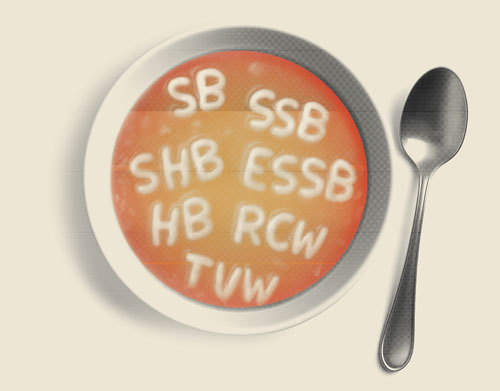
To understand what is happening during the legislative session, you have to get through a lot of alphabet soup. Here are some of the more common abbreviations you’ll encounter.
SB: Senate Bill. These bills are introduced in the Senate and are assigned a bill number between 5000 and 7999.
SSB: Substitute Senate Bill. These bills have been amended in a Senate committee.
ESB: Engrossed Senate Bill. These bills have been amended on the Senate floor.
ESSB: Engrossed Substitute Senate Bill. These bills contain all amendments and are the official versions approved on the Senate floor.
HB: House Bill. These bills are introduced in the House of Representatives and are assigned a bill number between 1000 and 3999. Similar to Senate bills, these may become engrossed House bills (EHBs), substitute House bills (SHBs), or engrossed substitute House bills (ESHBs).
RCW: Revised Code of Washington. This is the compilation of all laws currently in force in the state.
WAC: Washington Administrative Code. WACs are rules and regulations created by various state agencies to implement and enforce state laws.
TVW: Washington’s public affairs television network. It provides live and recorded coverage of committee meetings, court hearings, and other events.